Artificial Intelligence is no longer a trend in digital marketing — it is the infrastructure shaping how websites are built, optimized, and ranked.
In 2026, AI influences:
How websites are designed
How content is created
How search engines evaluate pages
How users discover information
How businesses generate leads
Understanding the future of AI in website development and SEO is essential for staying competitive.
This guide explains how AI is transforming the digital landscape and what businesses should prepare for next.
AI in Website Development: What’s Changing?
AI is reshaping the entire website creation process — from planning and design to deployment and optimization.
1. AI-Powered Website Builders
Modern website builders now use AI to:
Generate layouts automatically
Suggest design elements
Create wireframes
Recommend color palettes
Optimize structure for conversions
Instead of building from scratch, developers increasingly use AI-assisted workflows to speed up production while maintaining quality.
However, human oversight remains critical for strategy and customization.
2. Automated Code Generation
AI tools can now generate:
HTML/CSS structures
JavaScript components
Backend logic
API integrations
This reduces development time significantly.
But future-ready businesses understand that AI-generated code must be:
Reviewed for security
Optimized for performance
Structured for scalability
AI accelerates development — it doesn’t replace architectural planning.
3. Smart UX and Personalization
AI enables real-time personalization based on:
User behavior
Location
Device type
Browsing history
Engagement patterns
Websites can now dynamically adjust:
Headlines
Product recommendations
Call-to-actions
Content blocks
Personalized experiences improve conversion rates and engagement.
In the future, static websites will become less common. Adaptive websites will dominate.
4. Predictive Design Optimization
AI tools analyze:
Heatmaps
Scroll depth
Click behavior
Bounce rates
Then recommend design improvements automatically.
This shifts website optimization from guesswork to data-driven decision-making.
AI and SEO: A Major Evolution
Search engines themselves are powered by AI. This means SEO strategies must adapt.
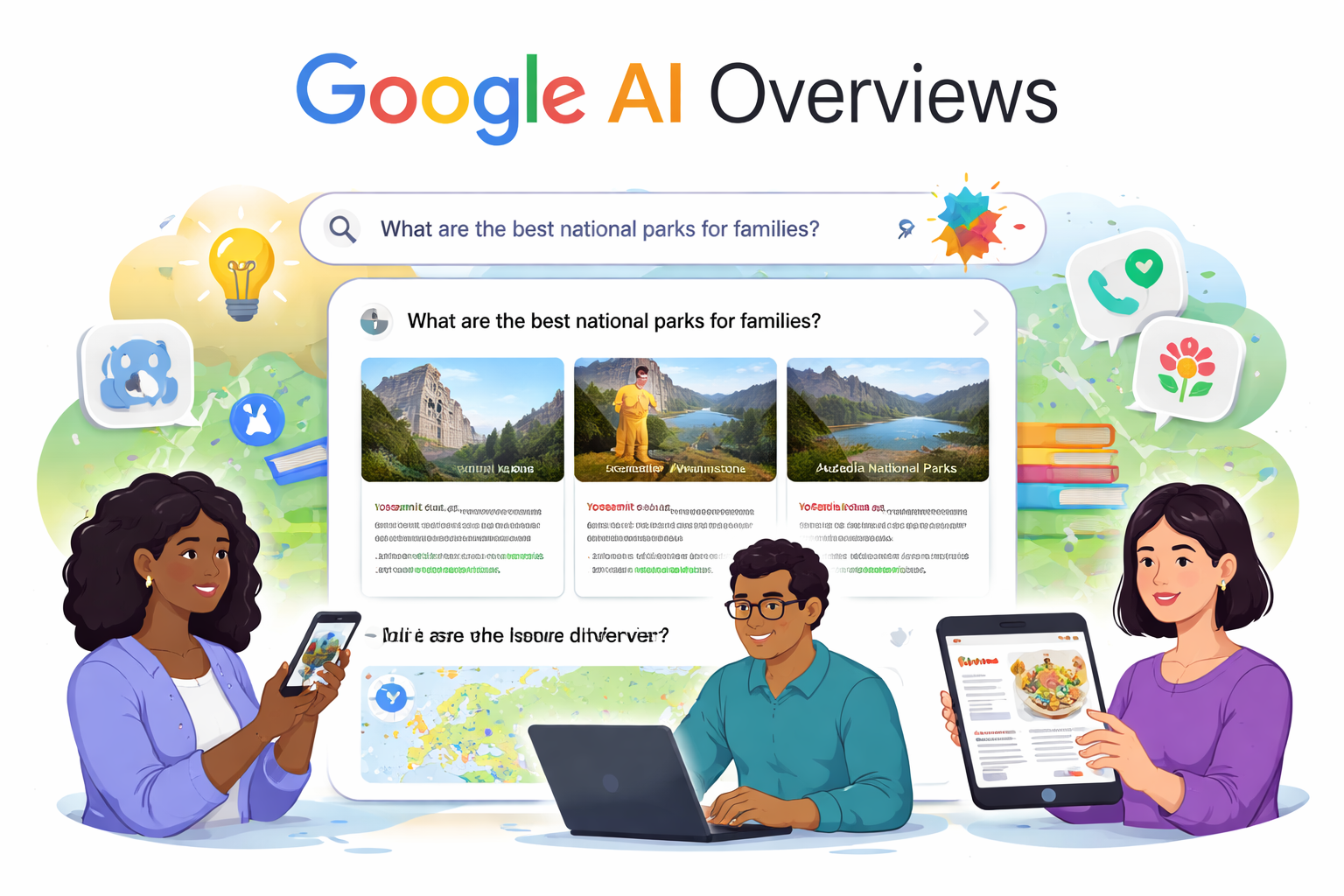
1. AI-Driven Search Results (AI Overviews)
Search engines now provide AI-generated summaries at the top of results.
To rank in these environments, content must be:
Structured clearly
Factually accurate
Directly aligned with search intent
Well-organized
Authoritative
Traditional keyword stuffing no longer works.
Semantic clarity is critical.
2. Natural Language Processing (NLP) and Context
AI search systems understand:
Context
Synonyms
User intent
Conversational queries
Instead of optimizing for exact keywords, websites must optimize for:
Topic depth
Related concepts
Question-based queries
User-focused content
SEO is now about comprehensive coverage, not repetition.
3. AI-Generated Content: Opportunity and Risk
AI tools can generate articles, product descriptions, and metadata.
Benefits:
Faster production
Idea generation
Content scaling
Risks:
Generic writing
Duplicate information
Lack of authority
Weak differentiation
Search engines prioritize helpful, original, and experience-backed content.
In the future, hybrid workflows (AI + human expertise) will dominate.
4. Automated Technical SEO Audits
AI-powered tools now detect:
Crawl errors
Broken links
Duplicate content
Speed issues
Schema gaps
This enables continuous optimization instead of periodic audits.
Businesses that adopt AI-driven monitoring gain a technical advantage.
5. Predictive Keyword and Trend Analysis
AI can forecast:
Emerging search trends
Seasonal demand shifts
Competitive gaps
Search behavior changes
Instead of reacting to trends, businesses can anticipate them.
Proactive SEO becomes possible.
How AI Will Impact Website Strategy in the Next 5 Years
1. Hyper-Personalized Search Experiences
Search engines will increasingly tailor results to:
Individual behavior
Past searches
Purchase history
Device patterns
Generic ranking strategies will become less effective.
Brand authority and user engagement will matter more.
2. Voice and Conversational Search Growth
Voice assistants and conversational AI tools are influencing search behavior.
Users now search using:
Full questions
Natural language
Conversational phrases
Websites must adapt by:
Including FAQ sections
Writing in natural tone
Providing direct answers
Optimizing for conversational queries is essential.
3. AI-Driven UX Testing
Future websites will automatically test:
Layout variations
CTA placement
Content formats
Design adjustments
AI will continuously optimize conversion elements in real time.
4. Enhanced Content Evaluation
Search engines will increasingly evaluate:
Expertise
Experience
Accuracy
Depth
Shallow content will struggle to rank.
Topical authority will be critical.
What Businesses Should Do Now
To prepare for the AI-driven future of website development and SEO:
1. Focus on Structured, Clear Content
Use logical headings
Provide direct answers
Include bullet lists
Keep paragraphs concise
Clarity improves both user experience and AI readability.
2. Strengthen Technical Foundations
Ensure:
Fast loading speed
Mobile optimization
Secure HTTPS
Clean URL structure
Proper internal linking
Technical SEO remains foundational.
3. Build Topical Authority
Instead of publishing random articles:
Create topic clusters
Cover subjects comprehensively
Interlink related content
Update regularly
Authority is built through consistency and depth.
4. Combine AI Tools With Human Expertise
AI should assist — not replace — strategy.
Use AI for:
Research
Drafting
Technical audits
Performance analysis
But rely on human expertise for:
Strategic direction
Brand positioning
Experience-based insights
Final quality control
5. Prioritize User Experience
AI increasingly evaluates behavioral signals such as:
Time on page
Engagement
Bounce rate
Interaction
A strong UX strategy supports both SEO and conversions.
Common Myths About AI in SEO
Myth 1: AI will replace SEO.
Reality: AI changes SEO — it doesn’t eliminate it.
Myth 2: AI-generated content automatically ranks.
Reality: Quality and intent alignment still matter.
Myth 3: Technical SEO is less important now.
Reality: Technical health remains foundational.
Myth 4: Keywords are dead.
Reality: Keywords evolve into semantic optimization.
The Core Shift: From Keywords to Intelligence
The biggest transformation is this:
SEO is moving from keyword targeting to intent satisfaction.
Website development is moving from static design to adaptive systems.
AI rewards:
Clarity
Authority
Structure
Technical excellence
User satisfaction
Final Thoughts
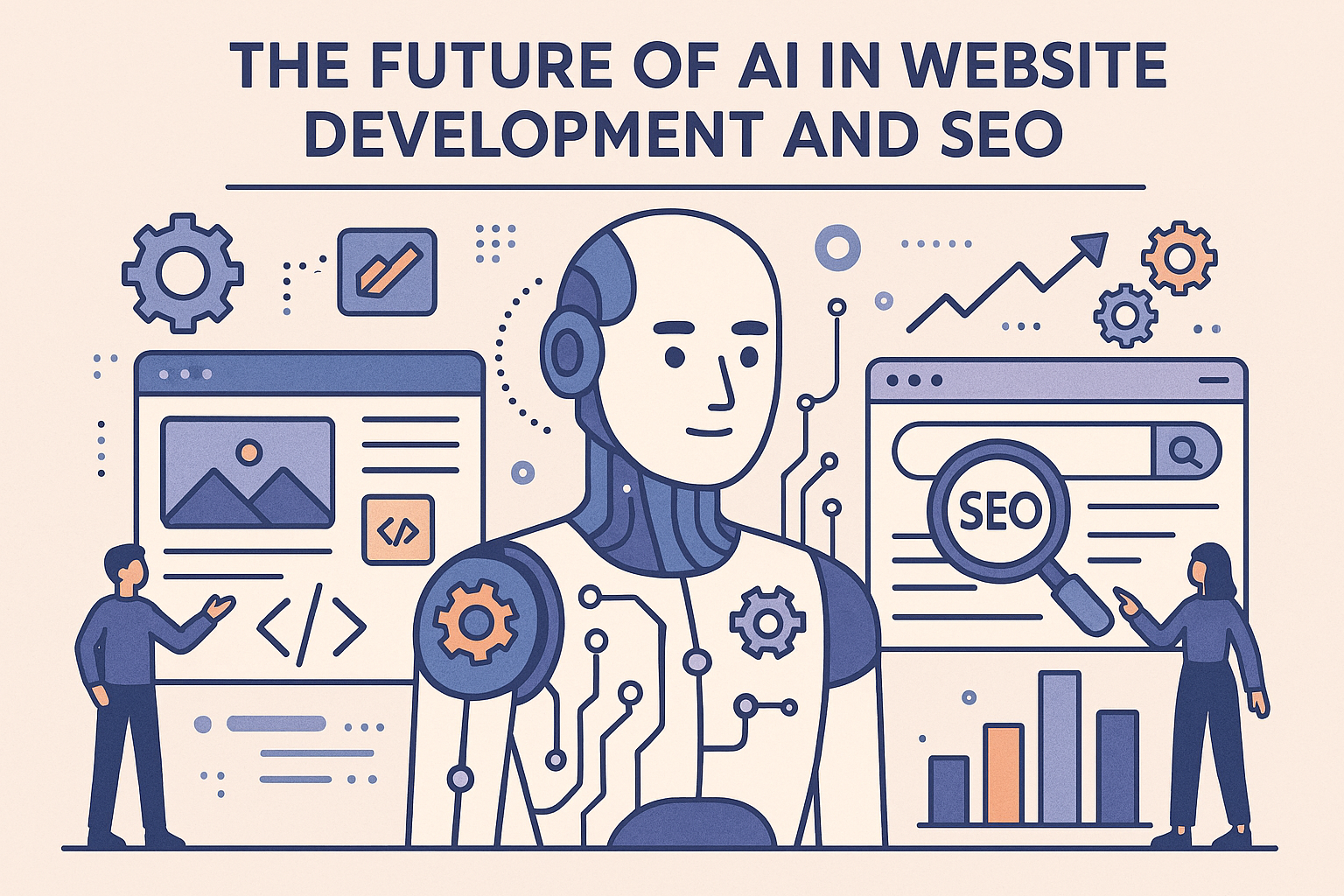
The future of AI in website development and SEO is not about automation alone — it’s about intelligent optimization.
Websites will become:
More personalized
More data-driven
More performance-focused
More intent-aligned
Businesses that adapt early will gain competitive advantages in visibility, engagement, and conversion rates.
In 2026 and beyond, success will belong to websites that combine:
Technical precision
High-quality content
Strategic AI integration
Strong user experience
AI is not replacing digital strategy — it is refining it.