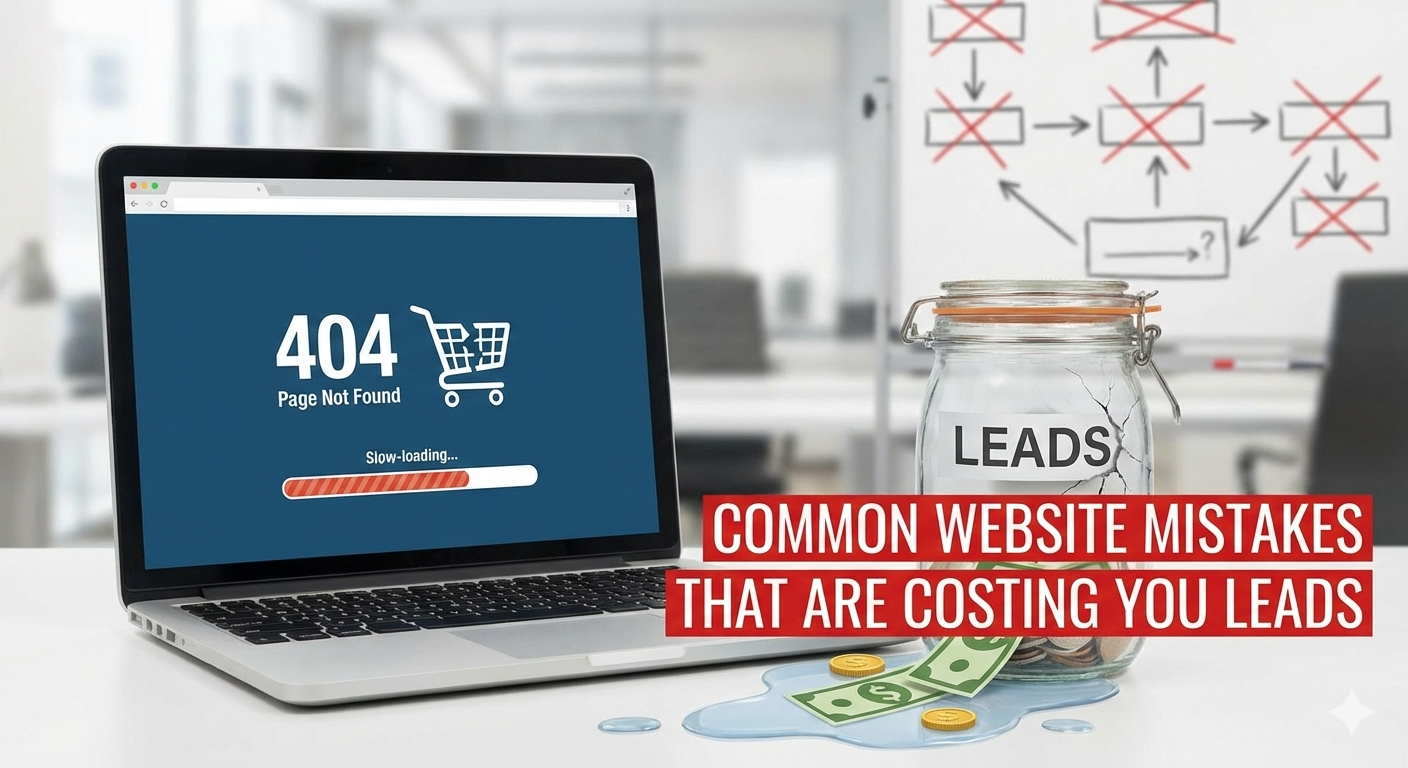
Your website should be your strongest lead generation tool. But in many cases, it silently pushes potential customers away.
Even small mistakes in design, structure, or messaging can reduce trust, increase bounce rates, and lower conversions. The worst part? Most businesses don’t realize these issues are costing them real opportunities.
In this guide, we break down the most common website mistakes that reduce leads — and how to fix them.
1. Slow Website Speed
Speed is not optional in 2026.
If your website takes more than a few seconds to load:
Visitors leave
Conversion rates drop
Search rankings decline
Users expect instant access. A slow website creates frustration and damages credibility.
Fix:
Optimize images, reduce unnecessary scripts, use reliable hosting, and implement caching. Regular performance audits are essential.
2. Poor Mobile Experience
More than half of website traffic now comes from mobile devices.
If your website:
Is not responsive
Has tiny text
Has buttons too close together
Requires zooming
Loads slowly on mobile
You are losing leads daily.
Fix:
Ensure your site is fully mobile-optimized with touch-friendly buttons, readable fonts, and fast loading times.
3. Confusing Navigation
Visitors should immediately understand how to move through your website.
If users struggle to find:
Services
Pricing
Contact details
Key information
They leave.
Complex menus and unclear structure reduce engagement and conversion rates.
Fix:
Simplify navigation. Use clear labels. Organize pages logically. Make important sections easy to access.
4. Weak or Missing Calls-to-Action (CTAs)
Your website should guide users toward a specific action.
Common CTA mistakes include:
No clear next step
Too many competing buttons
Poor placement
Generic text like “Submit”
Without direction, users hesitate — and hesitation reduces leads.
Fix:
Use strong, action-driven CTAs. Place them strategically throughout the page. Make them visually distinct.
5. Overwhelming or Cluttered Design
Too much information on one page creates cognitive overload.
Common design issues:
Too many colors
Excessive animations
Large blocks of text
Inconsistent layout
When users feel overwhelmed, they leave.
Fix:
Use white space strategically. Keep messaging clear. Focus on visual hierarchy so important information stands out.
6. Lack of Trust Signals
Visitors will not share personal information or make inquiries if they don’t trust your website.
Missing trust elements include:
Testimonials
Reviews
Case studies
Clear contact information
Professional branding
Security indicators
A website without credibility feels risky.
Fix:
Add social proof, client feedback, certifications, and visible contact details to build trust.
7. Complicated Contact Forms
Long forms reduce submissions.
If your form asks for too much information upfront, users abandon it.
Common issues:
Too many required fields
Confusing layout
No confirmation message
Poor mobile form design
Fix:
Keep forms short and simple. Only ask for essential information. Make submission quick and easy.
8. Poor Messaging and Unclear Value Proposition
When visitors land on your website, they should instantly understand:
What you offer
Who it’s for
Why it matters
If your messaging is vague or generic, users won’t stay long enough to explore.
Fix:
Craft a clear headline. Communicate benefits, not just features. Speak directly to your target audience’s problems.
9. Ignoring SEO Fundamentals
If your website is not optimized for search engines, you’re missing potential organic leads.
Common SEO mistakes:
Missing title tags and meta descriptions
Poor internal linking
Duplicate content
Thin pages
Unoptimized images
Without visibility, you won’t attract consistent traffic.
Fix:
Follow structured on-page SEO practices, improve technical health, and create helpful, relevant content.
10. No Clear Lead Funnel
Some websites attract traffic but fail to guide visitors toward conversion.
Examples:
No landing pages for specific services
No follow-up strategy
No lead magnets
No nurturing process
Traffic without structure leads to low conversions.
Fix:
Create clear user journeys. Use landing pages, email capture strategies, and well-defined conversion paths.
11. Outdated Design
An outdated website can harm credibility immediately.
Users associate design quality with business quality.
Signs of outdated design:
Old layouts
Low-resolution images
Inconsistent branding
Broken elements
Modern users expect clean, professional experiences.
Fix:
Refresh your design periodically. Align visuals with current UX best practices.
12. Not Tracking User Behavior
If you’re not measuring performance, you don’t know what’s costing you leads.
Without data, you cannot identify:
Drop-off points
High-bounce pages
Conversion bottlenecks
Underperforming CTAs
Fix:
Use analytics tools to monitor traffic, engagement, and conversion rates. Regular optimization should be ongoing.
How These Mistakes Impact Your Business
Website mistakes do more than reduce conversions. They affect:
Brand perception
Search engine rankings
Customer trust
Long-term growth
Often, businesses blame low leads on marketing or traffic — when the real issue is user experience and structure.
Companies like SIBZ SOLUTIONS frequently highlight that improving core website fundamentals often generates better results than increasing ad spend.
Quick Checklist to Prevent Lead Loss
Ask yourself:
✔ Does my website load quickly?
✔ Is it fully optimized for mobile?
✔ Is navigation simple and logical?
✔ Are CTAs clear and visible?
✔ Does the site build trust immediately?
✔ Is the contact form easy to complete?
✔ Is messaging clear and benefit-focused?
✔ Are SEO fundamentals implemented properly?
If the answer to any of these is no, you may be losing potential leads.
Final Thoughts
Your website should work for you — not against you.
In 2026, users expect fast, clear, trustworthy, and easy-to-navigate digital experiences. Even small friction points can significantly impact conversions.
Fixing common website mistakes does not always require a full redesign. Sometimes, targeted improvements in UX, speed, messaging, and structure can dramatically increase lead generation.
If your website isn’t producing consistent inquiries, it may be time to audit it carefully — because hidden mistakes could be costing you more than you realize.