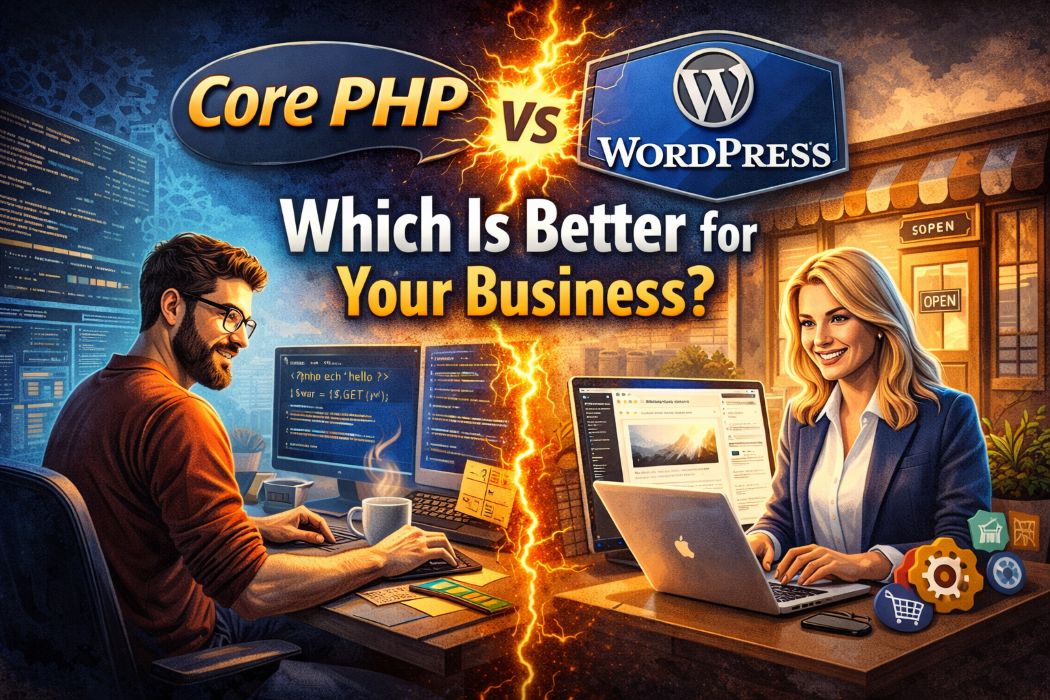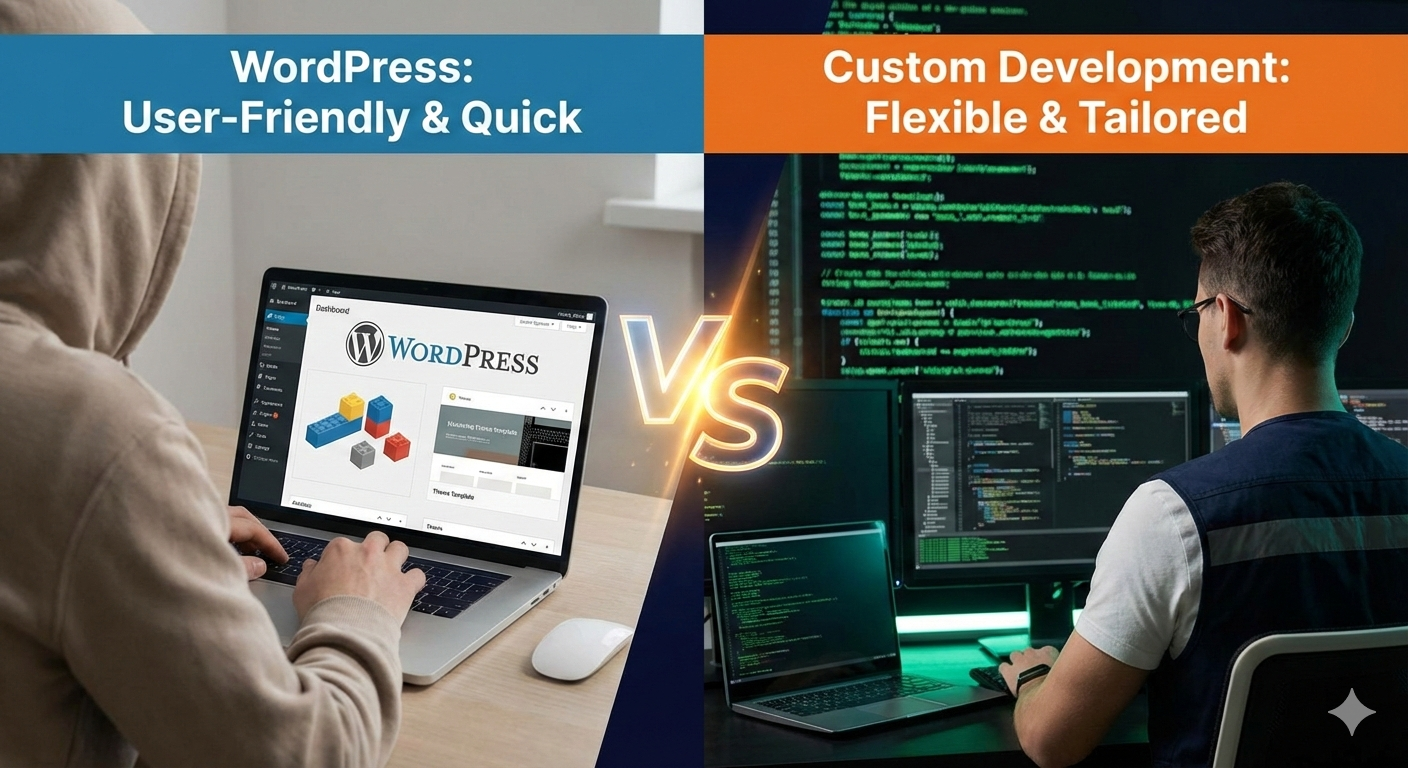
Choosing between WordPress and custom development is one of the most important decisions when building a website in 2026. The right choice depends on your business goals, scalability needs, budget, technical requirements, and long-term growth plans.
Both options are powerful — but they serve different purposes.
This guide breaks down the differences clearly so you can decide what fits your business best.
What Is WordPress?
WordPress is a content management system (CMS) that allows users to build and manage websites without developing everything from scratch.
It offers:
Pre-built themes
Thousands of plugins
Easy content management
Large developer community
Faster setup
WordPress powers a significant portion of websites globally because of its flexibility and accessibility.
What Is Custom Development?
Custom development involves building a website or web application from the ground up using programming languages and frameworks.
This can include:
Custom frontend and backend architecture
Tailored database structure
Specific feature development
API integrations
Performance-focused coding
Everything is built specifically for your business requirements.
Key Comparison Areas
1. Development Time
WordPress
Faster to launch
Pre-built themes and plugins reduce development time
Ideal for quick go-live projects
Custom Development
Longer development cycle
Requires planning, design, and testing
Best suited for complex platforms
If speed is a priority, WordPress typically wins.
2. Cost Considerations
WordPress
Lower upfront development cost
Ongoing costs for premium themes and plugins
Maintenance required for updates
Custom Development
Higher initial investment
Fewer plugin-related costs
Built specifically for long-term scaling
For startups or small businesses with limited budgets, WordPress can be more accessible.
3. Flexibility and Customization
WordPress
Flexible within theme and plugin limits
Advanced customization may require additional plugins
Heavy modifications can create conflicts
Custom Development
Unlimited flexibility
Built exactly to business specifications
No dependency on third-party plugins
For unique functionality or complex workflows, custom development provides more control.
4. SEO Capabilities
WordPress
SEO-friendly by default
Strong plugin support for optimization
Structured content management
Custom Development
Fully controlled SEO architecture
Clean code implementation
Custom schema integration
Optimized performance structure
Both can perform well in search engines when built correctly. Custom development provides deeper structural control, while WordPress offers convenience.
5. Performance and Speed
WordPress
Performance depends on theme and plugins
Too many plugins can slow the site
Requires optimization efforts
Custom Development
Built with lightweight, purpose-driven code
Better control over performance
No unnecessary features
If performance is critical — especially for high-traffic sites — custom builds often have an edge.
6. Security
WordPress
Popular platform, frequently targeted
Requires regular updates
Plugin vulnerabilities can create risks
Custom Development
Lower exposure to common attacks
Security measures tailored to your system
Controlled environment
Security depends on implementation quality in both cases.
7. Scalability
WordPress
Suitable for blogs, small business websites, and mid-sized platforms
Can scale with proper hosting and optimization
Complex scaling may require custom modifications
Custom Development
Designed for growth from the beginning
Easier integration with advanced systems
Handles complex applications more efficiently
If your business expects significant digital expansion, custom development offers long-term flexibility.
8. Content Management Ease
WordPress
User-friendly dashboard
Easy content publishing
Minimal technical knowledge required
Custom Development
May require a custom-built admin panel
Training may be necessary
Can be tailored to workflow needs
For businesses that frequently update content, WordPress offers convenience.
When to Choose WordPress
WordPress may be the right choice if:
✔ You need a fast launch
✔ Budget is limited
✔ Your website is content-focused
✔ You don’t require advanced custom features
✔ You want easy content management
It’s ideal for small to medium businesses, blogs, service providers, and informational sites.
When to Choose Custom Development
Custom development is often better if:
✔ You need unique functionality
✔ You require advanced integrations
✔ You expect high traffic growth
✔ Performance is critical
✔ You are building a web application or SaaS platform
✔ You want complete architectural control
It’s commonly chosen by larger businesses, startups with complex products, and enterprises.
Long-Term Perspective
WordPress is powerful and adaptable for many businesses. However, as complexity increases, dependency on plugins and theme structures can create limitations.
Custom development requires higher investment but offers:
Greater control
Cleaner architecture
Strong scalability
Tailored performance
The real decision should be based on where your business will be in the next 3–5 years — not just your immediate needs.
Final Verdict: What Should You Choose?
There is no universal winner.
Choose WordPress if you need:
Speed
Affordability
Simplicity
Strong content management
Choose Custom Development if you prioritize:
Scalability
Unique features
Performance optimization
Full technical control
In 2026, your website is more than just an online presence — it’s a business asset. The best choice is the one that aligns with your long-term growth strategy, technical requirements, and competitive positioning.
Evaluate your goals carefully, and build a foundation that supports future expansion rather than limits it.